Wolf Cooktop Repair
Wolf Cooktop Cleaner: What to Use on Glass, Grates and Burners
The right Wolf cooktop cleaner for induction or electric glass is a non-abrasive ceramic-glass cream such as Ceran, used once the top is cool, plus the supplied razor scraper for melted spills. Gas tops need only hot soapy water or baking soda paste on the grates.
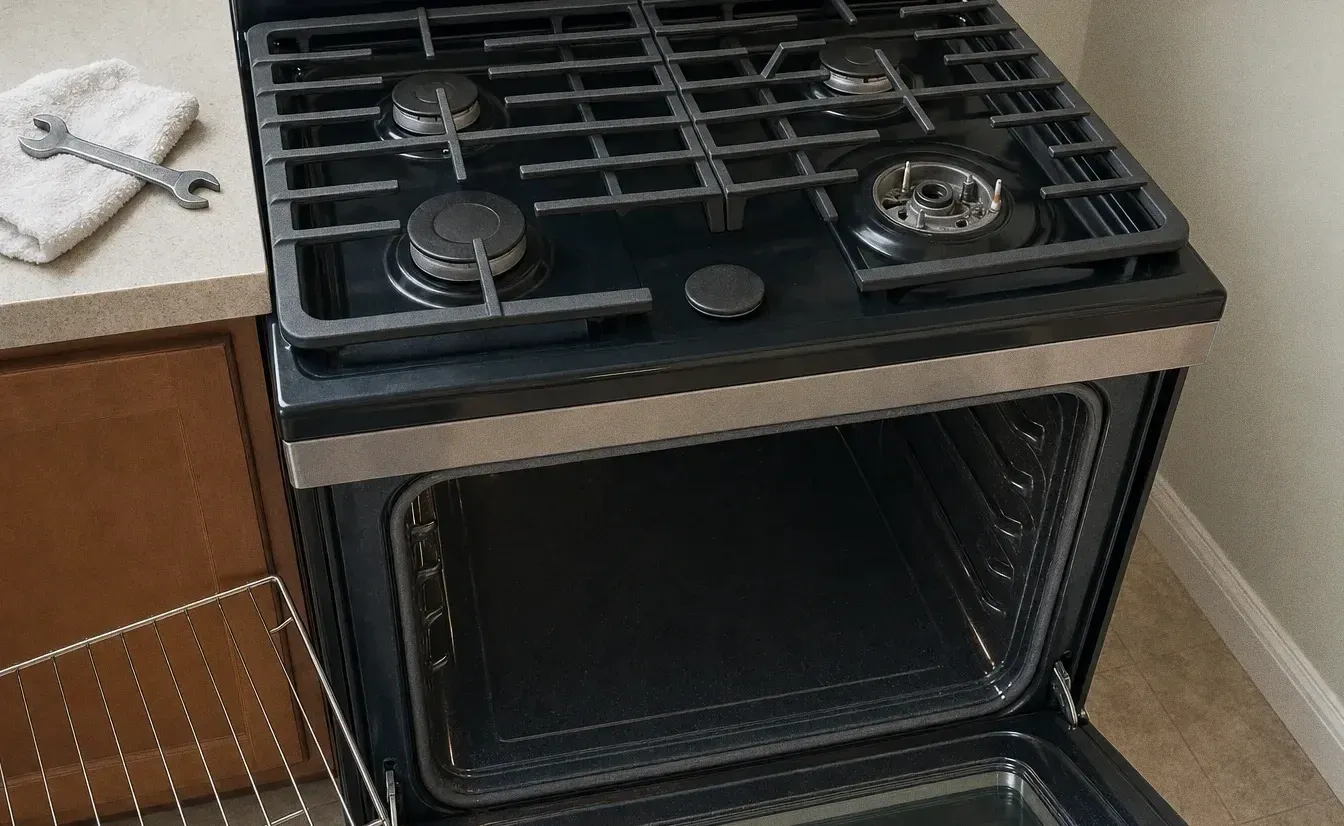
For a glass Wolf induction or electric cooktop, the right cleaner is a non-abrasive cream made for ceramic glass, such as a Ceran cooktop cleaner, rubbed on after the surface has cooled, with the razor scraper packed with the cooktop saved for anything that melted on. A gas Wolf cooktop needs no special product at all: the grates go to the sink for hot water and mild dish soap, or a baking soda paste on the stubborn edges, and the knobs get only a damp cloth. Five minutes after dinner and a short session once a week keeps either type looking new.
Island cooktops that see daily use reward the habit most, because a spill cooked over twice turns a quick wipe into a scraping job.
Start by knowing which surface you have
Wolf makes cooktops in gas, induction and electric versions, and its ranges and rangetops put gas burners on a stainless deck. Glass and stainless want different handling.
Two rules apply to all of them. Let the surface cool before you start, and keep steel wool, scouring powder and green scrub pads out of the cleaning drawer entirely. They leave fine scratches in glass and scuff stainless, and a scratched surface holds onto grime from that day on.
Induction and electric glass: cream, scraper, soft cloth
The routine for a smooth glass top is short:
- Wait until the glass is cool to the touch, since cream spread on a hot surface dries into a streaky haze.
- Dot the cream over the marked area and work it in with a damp paper towel, using small circles.
- For a ring of burned residue, hold the razor scraper nearly flat against the glass and push it gently across the mark.
- Wipe away every trace of cream with a clean damp cloth, then buff the glass dry.
Wolf’s own care guide sends anything melted onto the hot surface to that scraper, and with sugar, jam or a melted plastic bag it pays to act quickly. Switch the zone off, protect your hand with an oven mitt, and lift the mess while it is still soft, because sugar that hardens in place can pit the glass for good.
People searching for a Wolf induction cooktop cleaner often expect a special product, but it is the same cream used on electric glass. An induction zone heats the pan rather than the glass, so spills char less and the scraper stays in the drawer most weeks.
Gas burners, grates and igniters
Take the grates to the sink once they have cooled. Wash them in hot water with mild detergent, or spread a baking soda paste over browned corners and give it a few minutes before scrubbing with a nylon brush. Wolf’s guide asks you to clean them there rather than sinking them in a full tub, and they should be completely dry before they go back on.
The control knobs are simpler: a damp cloth, then a dry one. Wolf is clear that they never go in the dishwasher.
Lift each burner cap, wash it with the grates and dry it properly. When it goes back it must sit centered and flat on the burner base. A crooked cap, or a burner still damp from cleaning, is the usual reason a Wolf burner clicks on and on after a wash, and the fix is patience: give it time, or a hairdryer on its low setting, before you assume a part has failed.
The igniter is the small ceramic tip beside each burner. Crusted food on it comes off with a few light strokes of an old soft-bristle toothbrush, after which the tip should be left to air out before you light that burner. Never pick at it with a knife or a pin. An igniter that is cracked, chipped or wobbling in its mount has stopped being a cleaning matter, and our guide to a burner that sparks but never catches walks through what to check before you call.
The griddle and charbroiler on a Wolf range
A range with a charbroiler has its own routine. Switch the hood on about 5 minutes before you light it, which keeps the burner supplied with air. When you finish cooking, leave the charbroiler running for 10 minutes so leftover food burns away. Once the grate has cooled, lay wet towels over it, pour hot water on, let it soak, then scrub; it is also dishwasher safe. If the charbroiler keeps clicking while you cook, check that the knob is turned all the way to Hi.
The griddle needs a wipe after each use and, now and then, a full strip of its seasoning. Mix 1/2 cup (120 ml) warm water with 1 teaspoon (5 ml) griddle cleaner, work it across the plate, push the loosened residue into the grease tray, and rub in a thin coat of oil once the surface is dry.
A care schedule you can actually keep
- After each meal: once it is cool, wipe the glass or the stainless deck, and deal with anything melted straight away.
- Once a week: grates and burner caps go to the sink, and every cap is reseated flat and centered.
- Once a month: brush the igniters, wash the hood’s grease filters in hot soapy water, and wipe the control panel. On a dual fuel range, touch and hold Lock for 3 seconds first so a stray tap cannot start anything, and spray degreaser onto the cloth, never straight onto the panel.
- A few times a year: turn to the oven. Leave the door gasket alone apart from a careful wipe beside it, since it is soft and tears easily. Run self-clean when baked-on spills build up, with the kitchen well ventilated. If the door stays locked once the cycle ends, our self-clean door guide explains why.
When cleaning is not the answer
Some faults look like dirt and are not. Book a visit if:
- a burner keeps clicking after it is dry, the caps are seated, you have pushed the knob in and let it spring back, and you have switched the breaker off for 30 seconds;
- the cooktop sparks when nothing is turned on, which Wolf treats as a reason to have an electrician check the outlet wiring and polarity;
- an igniter is cracked or loose, or a glass zone will not heat at all.
If you smell gas, stop cleaning. Do not light anything, flip a switch or use any phone in the house; leave and call the gas company from a neighbor’s phone, or the fire department if you cannot reach them.
Our technician’s first visit is billed at $95 flat. That figure buys the full diagnosis along with the trip itself, and it is deducted from the repair once you say yes to the work. Replacing an igniter or spark module typically runs $280–$630, with a firm quote once the fault is found. See our Wolf cooktop repair page, or call (781) 371-8990 from Wellesley Hills, Wellesley Farms, Wellesley Square or Cambridge.
Still asked
What is the best cleaner for a Wolf induction cooktop?
A non-abrasive cream made for ceramic glass, such as a Ceran cooktop cleaner, is what Wolf's care guide names for its induction and electric tops. Apply it once the glass has cooled, buff it off with a soft cloth, and keep the razor scraper that came with the cooktop for anything that has melted onto the surface.
How do you clean a Wolf oven that is not self-cleaning?
Clean it by hand once the cavity is cool, using warm water, a little dish soap and a non-scratch sponge. Spread a baking soda paste over baked-on spots, leave it to work for an hour or so, then wipe and rinse. Skip harsh oven sprays unless your model's care guide allows them, and keep water and cleaner off the door gasket.
What is the best cleaner for a black gas stove top?
Warm water with a few drops of dish soap on a soft cloth is the safest choice, followed by a dry microfiber cloth, because streaks show badly on dark finishes. A baking soda paste lifts stuck-on spots. Avoid scouring powder, steel wool and abrasive pads, which leave dull scratches that never polish out.
How do I clean the griddle on a Wolf range?
Wipe it down after each use once it has cooled a little, and every so often strip the seasoning completely. Wolf's method uses 1/2 cup (120 ml) warm water mixed with 1 teaspoon (5 ml) griddle cleaner, with the loosened residue scraped into the grease tray, then a fresh coat of oil once the plate is dry.
Can Wolf grates and knobs go in the dishwasher?
The control knobs cannot, so wipe them with a damp cloth instead. Gas cooktop grates are meant to be washed at the sink in hot soapy water or with a baking soda paste, without soaking them. The charbroiler grate on a Wolf gas range is the exception, since Wolf lists it as dishwasher safe.